
Social Communication Therapy
Helping children navigate conversations, understand social cues, and build meaningful friendships. When social skills don't come naturally, explicit teaching makes the difference.
Schedule Free Consultation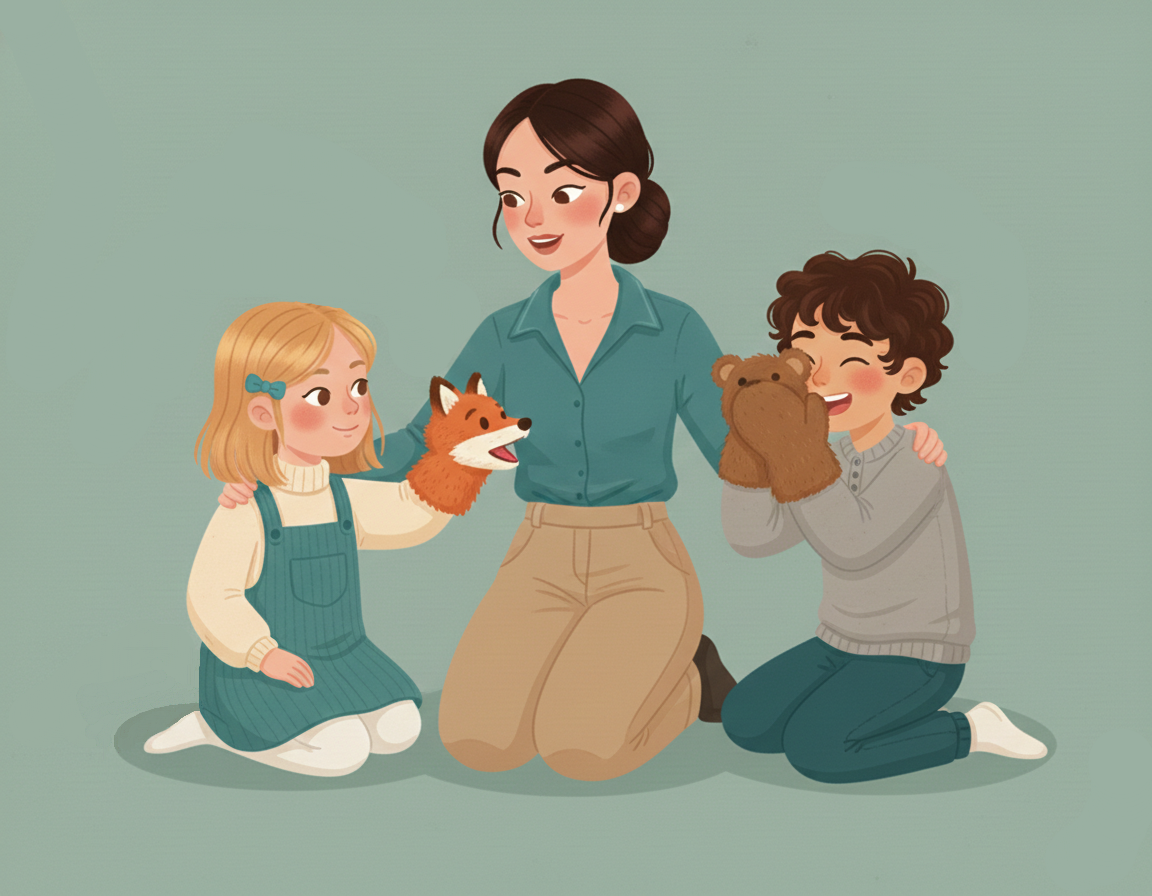
What is Social Communication?
Also called pragmatic language, social communication is how we use language in social situations. Some children need explicit teaching of skills that others pick up naturally.
Nonverbal Cues
Understanding facial expressions, body language, tone of voice, and the unspoken parts of communication.
Conversation Skills
Taking turns, staying on topic, knowing when to speak, and reading the flow of back-and-forth exchanges.
Perspective Taking
Understanding that others have different thoughts, feelings, and viewpoints than their own.
Understanding Social Communication Challenges
Social communication challenges are different from shyness. Shy children understand social rules but may be anxious about social situations. Children with social communication challenges may not intuitively understand the rules at all.
These difficulties can affect friendships, school success, and emotional wellbeing. Children may feel isolated or confused about why social interactions don't go as expected.
Social communication challenges are common in autism but can also occur in children without autism. This is sometimes called Social Communication Disorder (SCD).
More Than "Being Awkward"
When children consistently struggle with social interactions despite wanting to connect with peers, it's worth getting an evaluation. These skills can be taught, and early intervention makes a difference.
Signs Your Child May Benefit
- Difficulty making or keeping friends despite wanting social connection
- Trouble with back-and-forth conversation (may monologue or not respond)
- Taking things very literally, missing sarcasm, jokes, or idioms
- Missing facial expressions or body language cues others notice easily
- Difficulty understanding others' perspectives or predicting reactions
- Dominating conversations or not knowing when to stop talking
- Struggling with unexpected changes or flexible thinking
- Standing too close or not making eye contact appropriately
- Difficulty joining peer activities or groups naturally
- Not picking up on unwritten social rules that peers seem to know
- Appearing rude or insensitive without intending to be
- Preferring adult conversation over peer interaction
How Social Communication Therapy Helps
We explicitly teach social skills through structured activities, role-play, and real-world practice opportunities.
What to Expect
Social communication therapy combines explicit teaching with practice opportunities, working toward real-world application.
Social Assessment
We evaluate pragmatic language, social cognition, and communication through observation, testing, and input from parents and teachers.
Identify Needs
We determine which aspects are challenging: conversation, perspective-taking, nonverbal cues, or social problem-solving.
Individualized Goals
Goals target your child's specific needs, considering their age, interests, and the social contexts they navigate.
Explicit Teaching
Social rules that others learn intuitively often need to be explicitly taught. We break down skills systematically.
Practice Opportunities
Through role-play, video modeling, and guided practice, children rehearse skills in a safe environment.
Real-World Transfer
We work toward applying skills naturally at school, home, and in the community with parent strategies to support.
Concerned About Your Child's Social Skills?
Schedule a free consultation to discuss your concerns and learn how therapy could help your child connect with others more naturally.
Schedule Free Consultation